How to Clean Hair Follicles So That Produce Hair Again
Blocked and clogged hair follicles are a mutual business organization, especially among men with pilus loss.
After reading this guide, you will be able to:
- Get rid of the scalp sebum build-up (also known as epidermis plaque) that is bottleneck up your pilus follicles and reducing pilus growth
- Cease the sebum coming back
- Reduce dandruff and hair shedding whilst improving the strength, thickness, and overall healthiness of your hair.
What Causes Blocked Follicles?
To understand what causes blocked follicles, information technology helps to sympathise the structure of the hair follicle.
The Structure of Hair Follicles
While the pilus follicle is an contained micro-organ, it exists alongside other scalp structures. These include the sebaceous glands, the vasculature that supplies the follicle with blood, and the pore, namely the opening through which the hair and sebum pass.
The hair follicle itself is equanimous of multiple parts. At the lesser sits the hair bulb, which includes the dermal papilla and hair matrix. These structures are critical to the hair growth cycle. The ultimate size of the hair shaft is directly dependent on the size of the bulb.
As we move up the follicle, we find the hair shaft enclosed within ii layers of cells: the outer root sheath and the inner root sheath.

The sebaceous gland is direct connected to the hair follicle. Information technology empties its contents (sebum) into the follicular canal, via a brusque duct.
As the follicle shrinks (miniaturizes), the sebaceous gland enlarges and takes upwards much of the at present empty space. Predictably, the enlarged sebaceous gland will produce more sebum. This can harden and result in blocked pores and hair follicles.
Consumers often brand things worse by using backlog hair care products. These can build upwardly on the scalp, and in combination with the sebum exacerbate clogged follicles.
The consequences of blocked follicles are unpleasant and include stunted hair growth. The blockage may as well lead to folliculitis. This is a painful condition characterized past inflammation and infection. In extreme cases, folliculitis can manifest as visible bumps or puss-filled blisters.
How to Get Rid of Clogged and Blocked Hair Follicles
Footstep One: Choose the Right Cleansing Shampoo
An alternative to store-bought shampoos is to brand your ain shampoo. This will not contain harsh chemicals that could end up irritating your skin and possibly bottleneck your follicles.
Here are the basics of how to make your own hair loss shampoo:
- Take 2 tablespoons of organic apple tree cider vinegar
- Add together ane teaspoon of sodium bicarbonate (aka baking soda)
- Add ii drops of tea tree oil (optional)
- Add together 2 drops of peppermint essential oil (optional)
- Mix the ingredients in half a pint drinking glass forth with warm water
- Stir and wait to settle (the baking soda and apple tree cider vinegar will react)
- Pour onto wet pilus inside the shower and massage into the scalp for three minutes
- Rinse out with warm (bot not hot) water.
Apple cider vinegar and baking soda are natural cleansing agents that gently make clean your scalp and hair. They do this without stripping away oils that actually protect the pare and pilus.
The tea tree oil is anti-bacterial and anti-fungal. Information technology gently cleans away any fungi that can cause itching and dandruff.
The peppermint oil removes plaque, increases claret flow, and soothes the scalp.
If you lot would rather not make your own shampoo, then you will want to ensure you choose a shampoo with high-quality ingredients. You should consider shampoos containing ingredients similar tea tree oil, apple cider vinegar, and rosemary.
Step Two: Perform a Salicylic Acid Peel to Remove the Layer of Plaque
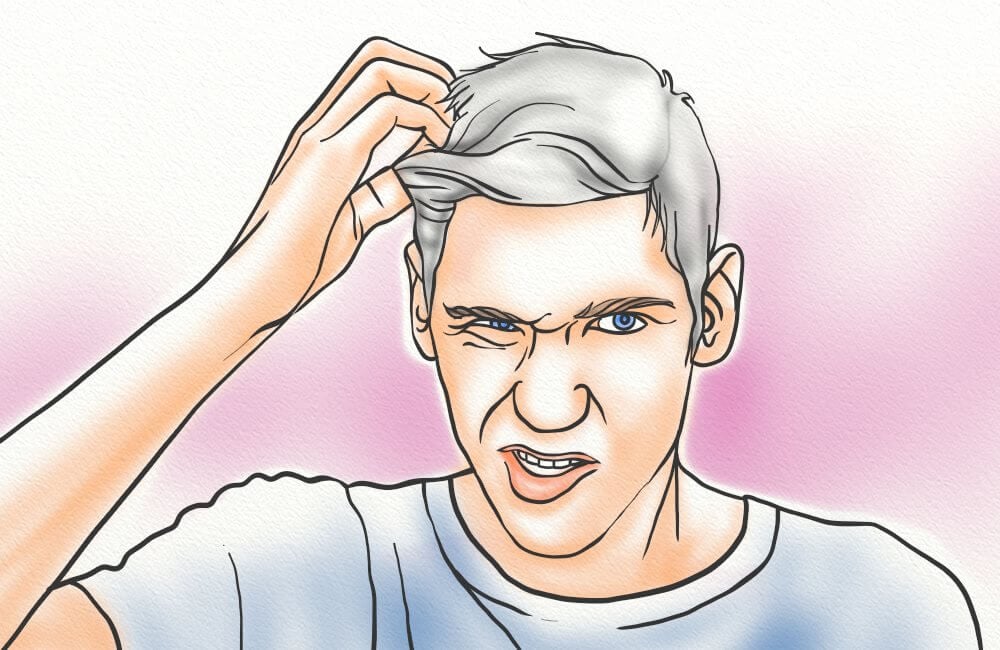
Dermatologists employ salicylic acrid to gently peel away the layer of expressionless skin cells. This reveals the youthful, radiant skin underneath.
Although this method is used mostly on the face, it is the perfect way to remove the layers of dead skin, oil, DHT, and clay that clog and cake the pores and follicles of the scalp.
Salicylic Acrid Scalp Peel
Here is how to perform a salicylic acid peel.
What You Need:
- Salicylic Acid
- Kokosnoot Oil
Directions:
Wash your pilus, rinse thoroughly, and towel dry.
Utilize the coconut oil to your scalp, ensuring information technology is spread thoroughly. This will protect your scalp from over-drying acquired by salicylic acrid.
Allow the kokosnoot oil to sit for thirty minutes, and so utilise a dropper to apply small amounts of the salicylic acid to trouble areas of your scalp.
Go out in for 10 minutes, and then rinse and pare the remaining salicylic acid.
A Scalp Peel Alternative
For some individuals, the salicylic acid peel tin can be a flake harsh. This is especially true if you have an underlying scalp condition, such as dandruff or seborrheic dermatitis.
In this case, y'all tin utilise the alternative peel below.
What You Demand:
- Himalayan bounding main salt (2 tablespoons)
- lemon juice (two tablespoons)
- olive oil (ii tablespoons)
Directions:
Combine the ingredients above. Shake the combination vigorously.
To use, pour the mixture into your palm and utilize directly to the most troublesome areas of your scalp. Gently massage the mixture in, using your fingertips and working them in small, circular motions.
Let the mixture sit on your scalp for five-10 minutes, since the citric acrid in the lemon needs time to break down scalp buildup. Rinse with lukewarm (or even better, cold) water.
You will probable need to perform this peel a number of times before the plaque is fully removed. Still, this will depend on the severity of the buildup and other factors.
For further results, you lot can utilize a hairbrush to remove the backlog buildup. This will stimulate blood circulation while further helping to unclog the hair follicles.
Stride Three: Reduce Scalp Damage with Colder Showers
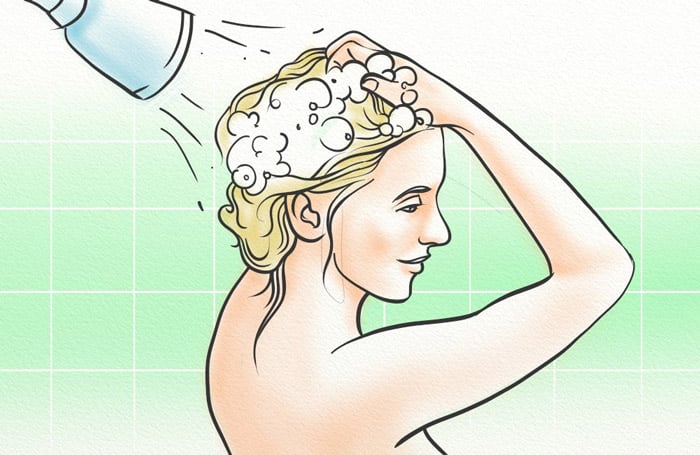
Excessively hot showers can dry and damage the scalp. Although you may think the hot water would be adept at unclogging and unblocking the pores, it actually causes more problems than information technology solves. The peel will dry out out, causing inflammation and dandruff. The hair follicles will get dry and breakable, and the body will attempt to secrete oils to moisturize the scalp, making the problem worse.
The culling is to shower with lukewarm or, ideally, cold water.
Lukewarm and cold water will take fewer drying effects on the scalp. Cold showers can also boost circulation in the scalp, helping to increment oxygen flow to blood vessels and making the hair follicles stronger.
Footstep Four: Ameliorate Your Nutrition to Reduce Sebum Buildup

Improving your diet can help naturally reduce the plaque that builds upwards over time. It will likewise help improve the quality and speed of your pilus growth.
Hither are a few elementary pointers to help improve your diet for a better scalp status:
- Reduce unhealthy fats, such as frying oils, and those found in greasy foods.
- Eat less processed foods.
- Prioritize high-quality natural fats such as those from nuts, seeds, common cold-water fish, and avocados.
- Eat a low-glycemic-load nutrition.
The goal is two-fold.
Start, a diet post-obit the guidelines above is less likely to result in excess sebum production. This has previously been implicated in conditions such as acne.
Second, a healthy, whole foods diet will ensure y'all meet your torso's food and mineral needs. This contributes to healthy hair growth from the inside.
Determination
It is common to feel sebum buildup on the scalp. Subsequently all, the scalp is exposed to many chemicals and irritants, including hair care products and pollutants. Dysregulation of sebum product, including overgrowth of the sebaceous glands, can exacerbate the problem. Ultimately, this buildup can lead to clogged pilus follicles.
The in a higher place information volition enable you to get rid of chock-full and blocked hair follicles, as well every bit prevent them from reoccurring. This will ensure your scalp is the optimal environment for full, healthy hair growth.
Source: https://www.hairguard.com/clogged-blocked-hair-follicles/
0 Response to "How to Clean Hair Follicles So That Produce Hair Again"
Post a Comment